Self-regulation
Meditation
An intentional self-regulation of attention that can lead to greater health and self-discovery.
 A long arrival in the West
From the late 1950s, with Jack Kerouac’s The Dharma Bums, through the 1970s, Eastern philosophy reached the general public at a new level, by way of figures like Maharishi, Transcendental Meditation, and the Beatles. The influence of the East on Western thought can be traced back at least to Emerson, as the writer Philip Goldberg has noted.
In time, scientists such as Wallace and Benson brought meditation into the laboratory, and since then there has been a great deal of research on it from a scientific standpoint.
 What meditation is
The literature can be confusing, because terms have often been used interchangeably over the years. Techniques involving imagery, systematic relaxation, and focus on visual or kinesthetic experience appear in both traditional writing and psychological literature.
The general category for mental techniques used for self-improvement or health is self-regulation, which includes systematic relaxation, hypnosis, meditation, and guided imagery. From a psychophysiological perspective, meditation is an intentional self-regulation of attention that can lead to greater health and self-discovery.
Most descriptions involve concentration, relaxation, an altered state of awareness, a suspension of logical thought or judgment, and the keeping of a self-observing perspective, that is, being in the present moment.
 Three styles
Recent research has focused on three general styles. The first is focused-attention meditation, in which a person concentrates on an object of attention, such as a mantra or the cycle of the breath.
The second is open-monitoring, in which a person simply observes the sights, sounds, and sensations that arise without judging or analyzing them. Mindfulness is an example.
The third involves cultivating a particular feeling, such as a meditation of loving kindness, in which a person creates feelings of benevolence or compassion toward others through imagery and memory.
 What the research shows
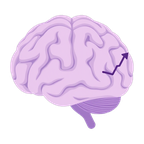
Research continues to show mental and physical benefits, with evidence from imaging and other neuro-technology. Early research suggested that meditation induces a hypometabolic wakefulness that reduces stress and supports health.
It produces a response opposite to activation of the sympathetic nervous system, with decreases in oxygen consumption, blood pressure, respiration, and heart rate, and an increase in alpha and occasional theta waves on EEG.
Later research found EEG synchrony in the brains of advanced meditators, with increased alpha waves in the frontal and central regions and increased theta waves in frontal regions.
Exploring meditation in your own care
Meditation can be woven into a thoughtful, individualized course of treatment alongside psychotherapy and clinical hypnosis. If you are curious whether it has a place in your own work, we can talk it through together.
Request a consultation